Gay Kigali has no public scene: no gay bars, no Pride and no venues to recommend. Rwanda has never criminalised same-sex relations, but its Constitution recognises only marriage between a man and a woman, and society is conservative. So is Rwanda gay-friendly? Legally tolerant and socially discreet, in one of Africa's safest capitals.
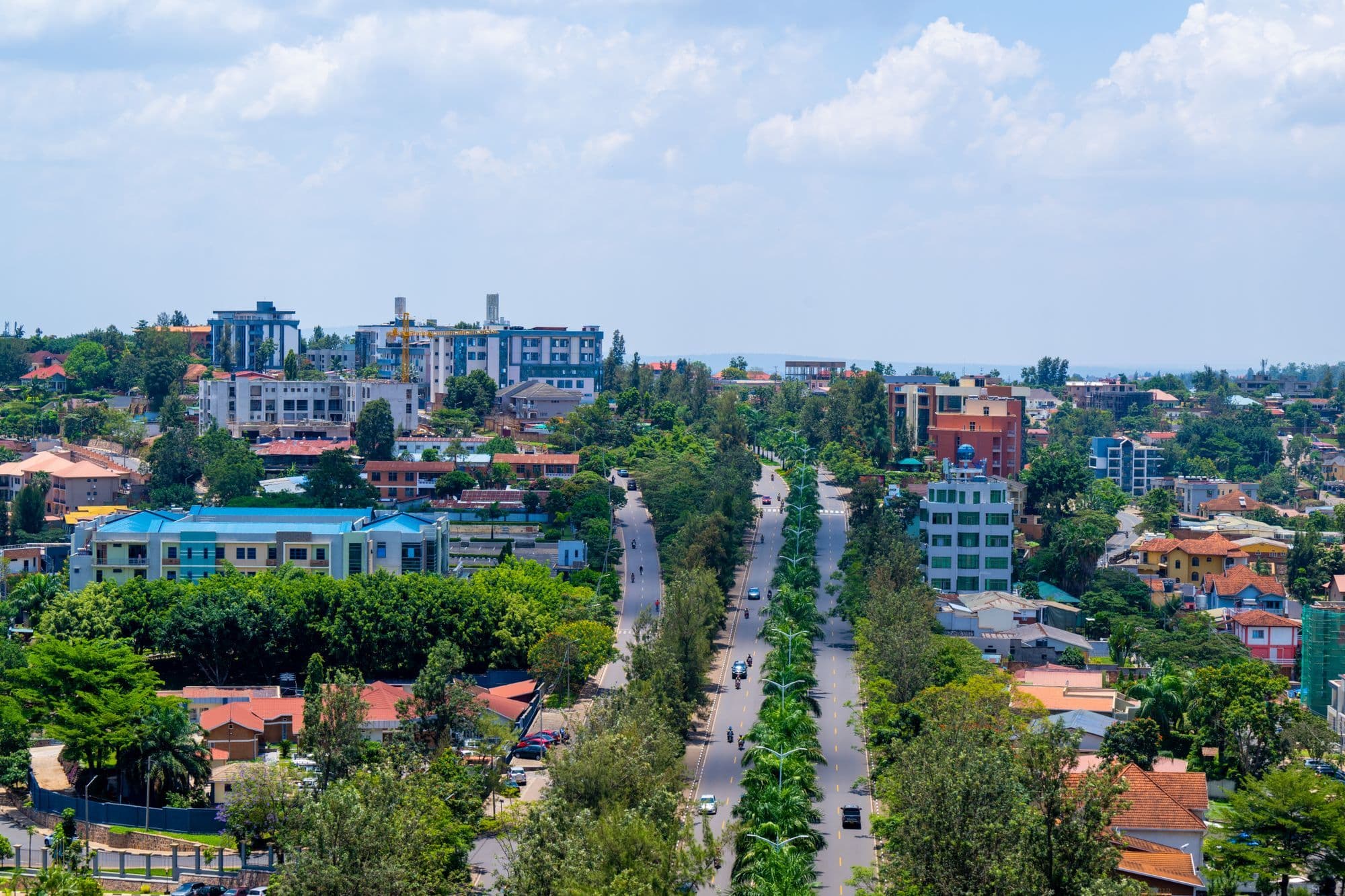
Kigali surprises people. It is green, orderly and quiet, built across hills, with motorbike taxis whose riders hand you a helmet and streets swept clean on the last Saturday of every month. The city's story is the 1994 genocide and what came after, and most visitors leave moved by it. For a gay couple, it is an easy place to be, as long as affection stays private.
This guide covers what the law means for you, where to stay, the Kigali Genocide Memorial, the coffee and food, gorilla trekking and Lake Kivu, and the habits that matter here. It was checked in October 2026. For a local who knows both the history and the logistics, Kigali's local guides are ID-checked and bookable for 4, 6 or 8 hours.
Is Rwanda gay-friendly?
Legally, yes; socially, it is discreet. Rwanda never criminalised same-sex relations, and the UK government's Rwanda advice says they are not illegal, that Rwanda's laws do not discriminate on sexual orientation, and that its constitution prohibits all forms of discrimination, while warning that same-sex relationships "can be frowned upon by locals".
The legal position in one sentence: Article 17 of the 2003 Constitution, revised in 2015, says a civil monogamous marriage between a man and a woman is the only recognised marital union, so there is no same-sex marriage or partnership. The ILGA World Database, Australia's Smartraveller and the US State Department have their own summaries.
In practice, Rwandans are reserved about private life in general, and public affection is rare between any couple. Two men travelling together, sharing a room and eating out every night draw no attention in Kigali's hotels and restaurants. Discretion and privacy for LGBTQ+ travelers explains what a guide sees about you on our platform.
Kigali is the rare city where the law is on your side and the street simply does not ask. Keep it private, and nobody will make it their business.
Is Rwanda safe for gay travelers?
Yes. Kigali has a reputation as one of the safest and most orderly capitals in Africa, and the risks for a gay traveler are mainly about border areas, health rules and respecting a conservative culture rather than crime.
Kigali's motorbike taxis, called motos, are cheap and everywhere; riders carry a spare helmet for you. For evenings or with luggage, a taxi booked through your hotel is easier. Keep valuables out of sight in crowded markets, as you would anywhere.
Where to stay in Kigali
Stay in Kiyovu for the classic hotels and views, Kimihurura for restaurants and nightlife, or Nyarutarama for quiet, larger hotels near the golf course. Kigali is spread across hills, so wherever you stay, you will use taxis or motos.
- Kiyovu: the old upmarket quarter on a ridge near the centre, home to Hôtel des Mille Collines, whose story was told in the film Hotel Rwanda, and several boutique hotels.
- Kimihurura: embassies, bars and the city's busiest restaurant streets, close to the Convention Centre.
- Nyarutarama and Kacyiru: greener and quieter, with larger hotels and the Inema Arts Center nearby.
Two men booking a double room is unremarkable in Kigali's international hotels, such as the Kigali Serena, and in its boutique hotels.
Heaven Restaurant & Boutique Hotel
StayKiyovu · Boutique hotel; check the website for rates · Restaurant open daily from morning to 10:30 PM; book a terrace table for sunset
KN 29 Street, Kiyovu, Kigali
- Terrace over the city
- Social enterprise roots
- Restaurant and rooms
Tip: Even if you stay elsewhere, come for dinner on the terrace; it is one of the best views in Kigali.
Heaven opened in 2008 as a social enterprise to train young Rwandans in hospitality, and it is now one of the city's best-known restaurants as well as a boutique hotel. Its terrace looks out across Kigali's hills.
Kigali Genocide Memorial
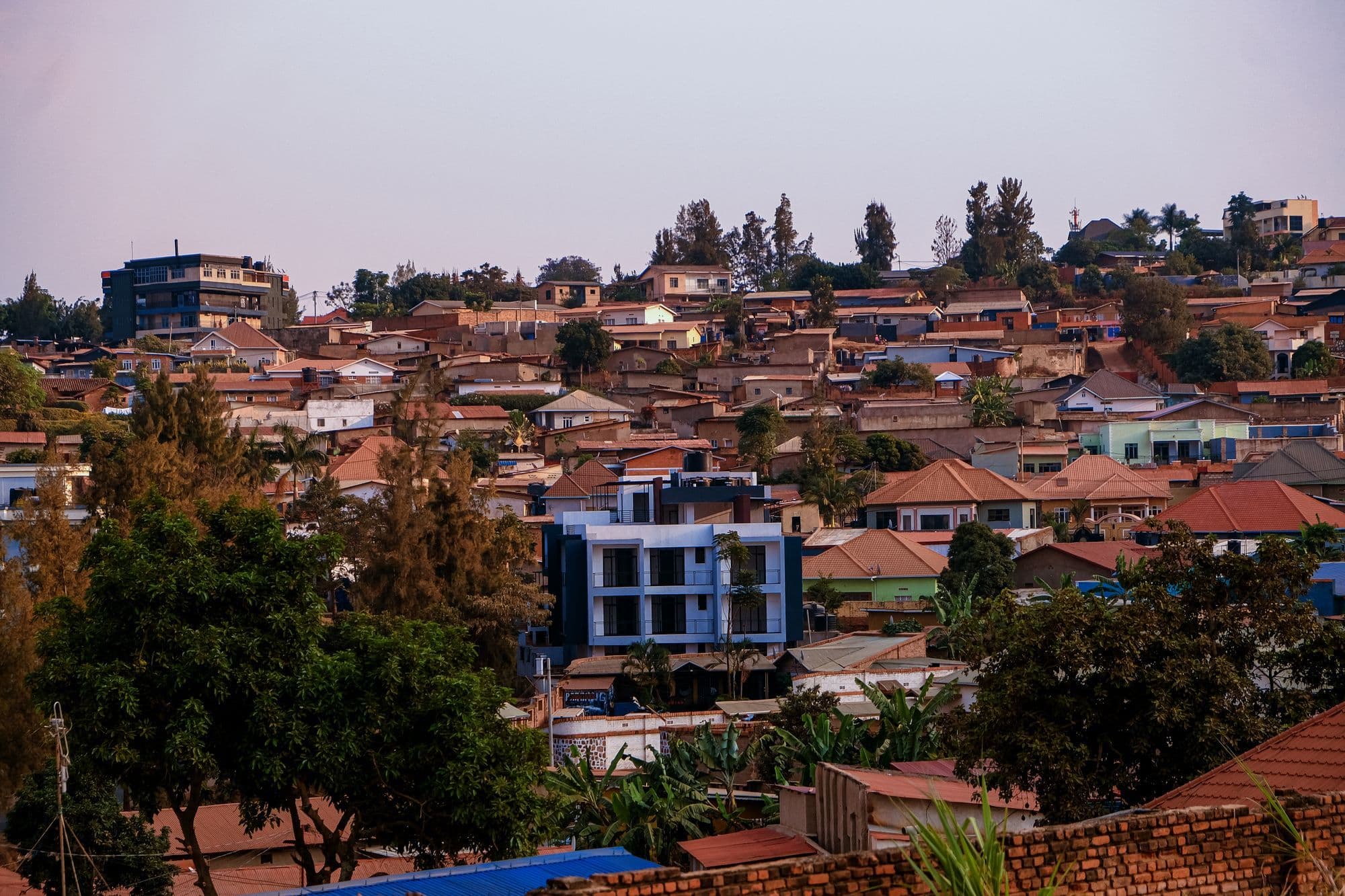
Visit the Kigali Genocide Memorial early in your trip: it explains the country you are travelling through. It is the burial place of victims of the 1994 genocide against the Tutsi and a museum of how it happened.
Kigali Genocide Memorial
ActivityGisozi · Free entry; donations welcome; audio-guide package available · Daily 9 AM to 5 PM, last entry 4 PM; 1 PM to 5 PM on the last Saturday of each month
- Guided by witnesses
- Allow 90 minutes
- Gardens and mass graves
Tip: It is closed on 25 December and 1 January, and usually on the morning of 7 April, when Kwibuka commemorations begin.
Allow at least an hour and a half, and do not plan anything heavy straight afterwards. A local guide adds what the exhibits cannot: how the city rebuilt, what reconciliation looks like day to day, and the right questions to ask, and not ask, about it.
Things to do in Kigali
Kigali rewards a slow day: art, a neighbourhood walk and a market, then coffee with a view. Combine them with the memorial over two days.
Inema is Kigali's best-known contemporary art space, with paintings, sculpture and textiles by Rwandan artists for sale.
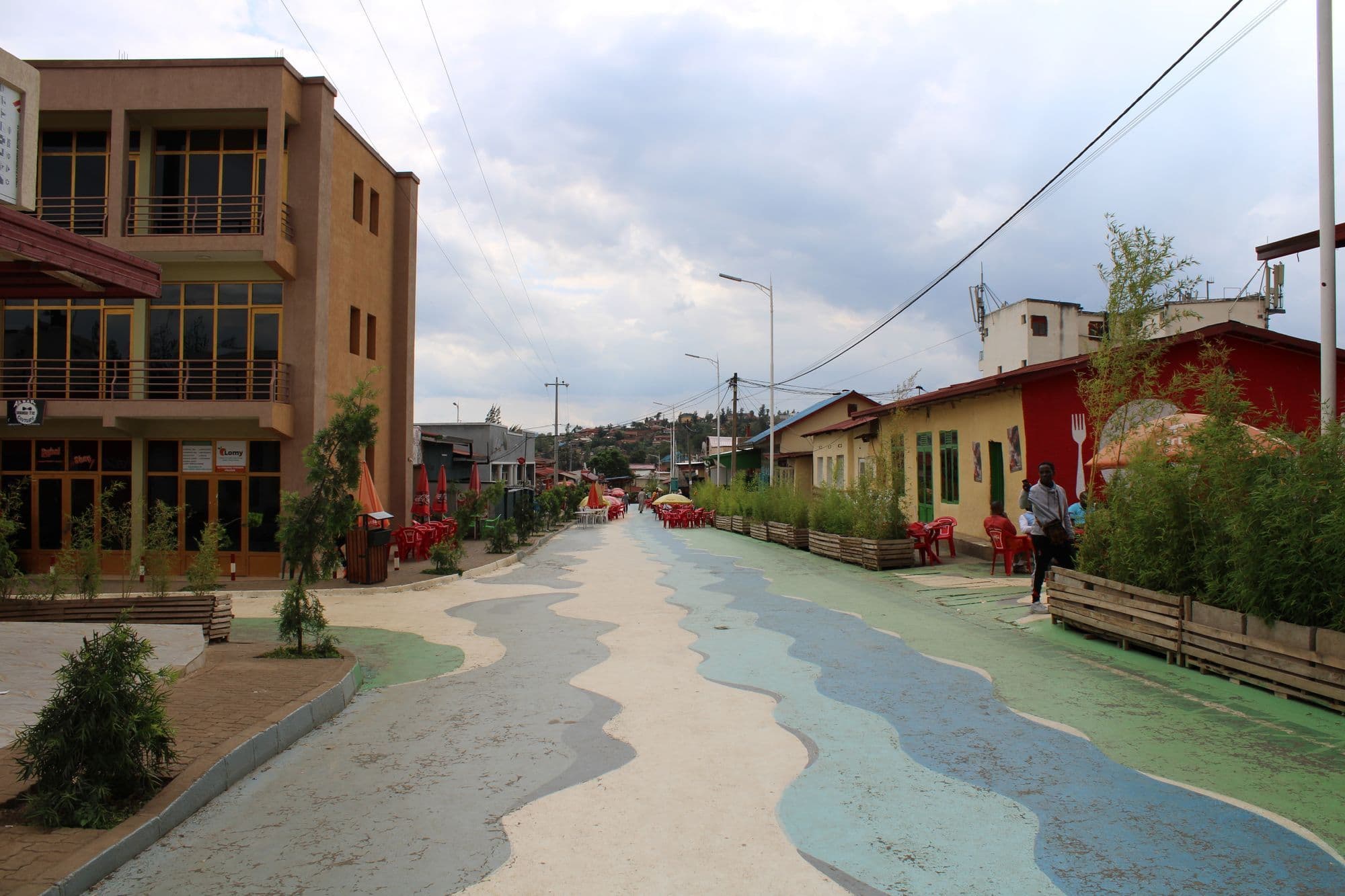
In Nyamirambo, Kigali's oldest and most Muslim neighbourhood, the Nyamirambo Women's Center runs a two-and-a-half-hour walking tour with lunch, about 20,000 francs according to recent visitors. Kimironko Market is the city's busiest, for fabric, produce, crafts and tailors.
Kigali restaurants and coffee
Rwanda grows some of Africa's best coffee, and Kigali's cafés are where you taste it. Two to start with:
Question Coffee buys from women coffee farmers and runs its Gishushu café as a social enterprise. It is the place to understand what you are drinking.
Inzora sits on the roof of the Ikirezi bookshop, with a quiet terrace, good coffee and simple food. For dinner, Kimihurura's restaurant streets and the hotel terraces of Kiyovu are the easiest evenings out.
See Kigali with someone who knows its story
Kigali's local guides are ID-checked before their profiles go live. Book 4, 6 or 8 hours, pay securely, and plan the memorial, markets and coffee in chat once your booking is confirmed.
Meet Kigali's local guidesGorilla trekking: permits, prices and the drive to Volcanoes
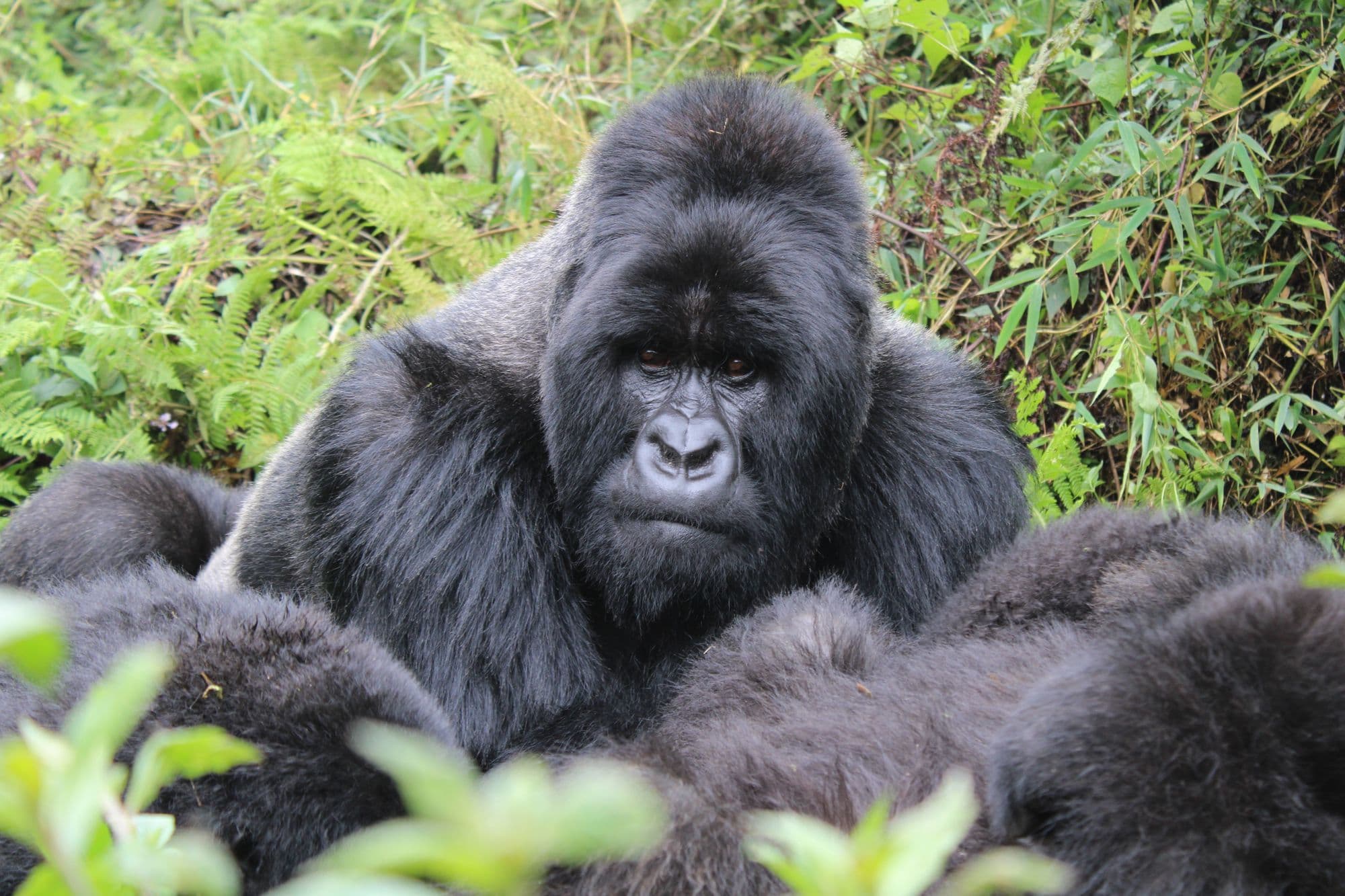
A gorilla permit costs $1,500 per person per day in 2026, according to Visit Rwanda, and buys one hour with a habituated mountain gorilla family in Volcanoes National Park. Only eight permits are issued per family per day, so book months ahead through the official Irembo platform or a licensed tour operator.
Treks start from the park headquarters at Kinigi at 7 AM, so most people sleep near Musanze the night before; the drive from Kigali takes two to three hours. The minimum age is 15. Treks through steep, muddy forest can take several hours, so tell the rangers at the morning briefing honestly how far you can walk.
Our guides in Musanze are local guides for the town, the drive and the days around the trek, not the park rangers who lead the trek itself. They can sort the logistics, the timings and a day in the area, and multi-day tours explains how one booking covers several days in a row.
Lake Kivu: Gisenyi and Kibuye
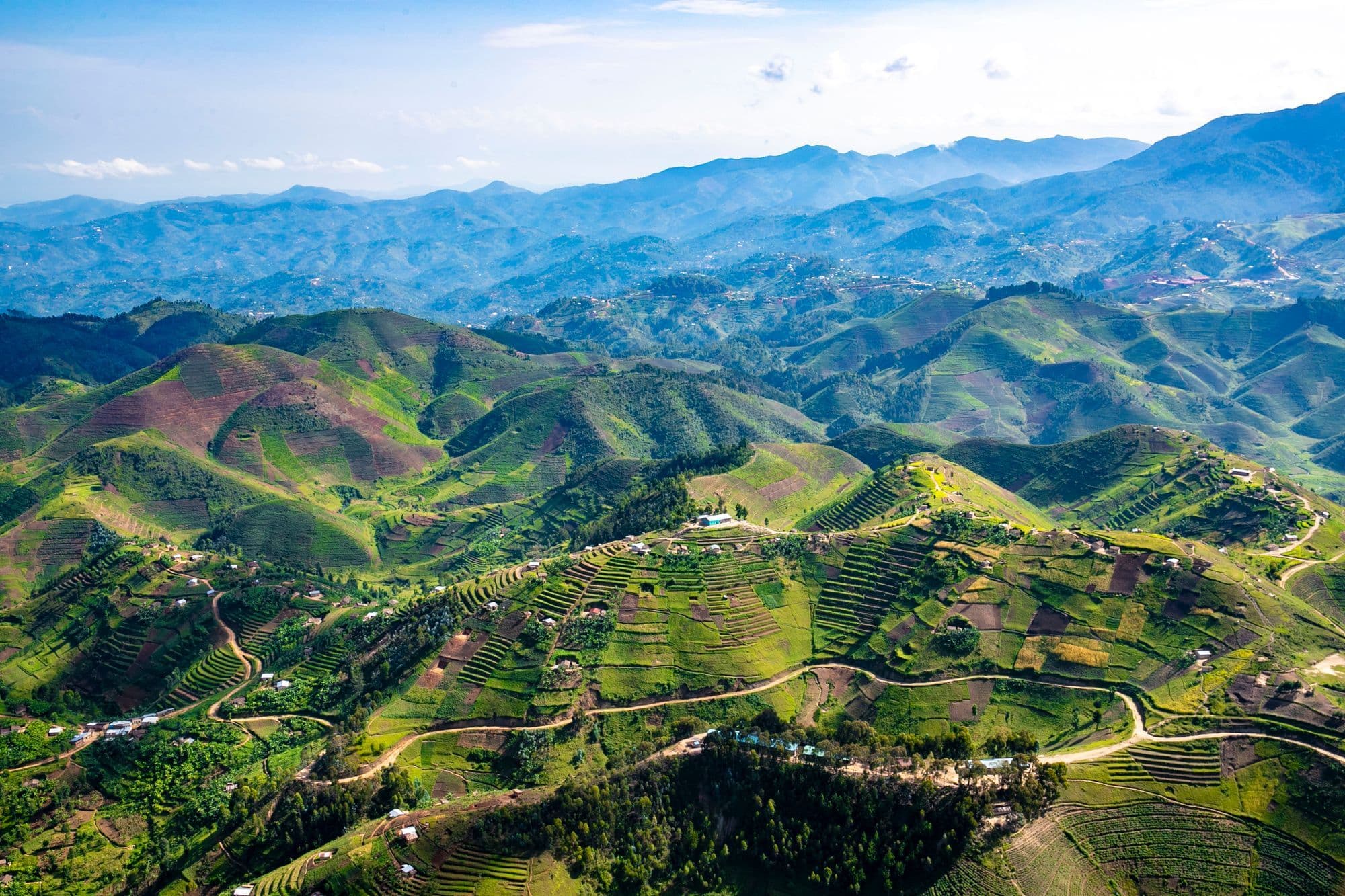
Lake Kivu is Rwanda's beach: a long freshwater lake on the western border, with two main resort towns. Gisenyi, also called Rubavu, is the livelier one, with lakeside hotels and a sandy shore; Kibuye, or Karongi, is quieter, with islands and boat trips.
Gisenyi sits right on the border with Goma in the Democratic Republic of Congo, so check current UK and Australian advice before you go, especially while the Ebola outbreak in DRC continues. Our guides in Gisenyi and Kibuye know the lake, the boat trips and the coffee and tea estates in the hills behind.
Best time to visit Rwanda
June to September, the long dry season, is the best time to visit Rwanda, especially for gorilla trekking, when the forest trails are drier. December to February is a shorter dry season. March to May brings the heaviest rains; trekking still runs, but it is wetter and muddier.
Kigali is high and mild all year, with warm days and cool evenings. Plan around Kwibuka, the national commemoration that begins on 7 April each year: it is a solemn period, and some activities pause.
Before you go
- Check your visa. UK and other Commonwealth citizens get a free 30-day visa on arrival, according to the UK's entry page; others should check Rwanda's immigration department.
- Leave plastic bags and vapes at home. Both are banned and will be confiscated.
- Plan around Umuganda. On the last Saturday of each month, community work runs through the morning and much of the city pauses.
- Book gorilla permits first, then build the rest of the trip around your date.
- Tip modestly. Our guide to tipping a private tour guide quotes Visit Rwanda's guideline of about $10 a day for guides and drivers, ideally in francs.
Rwanda is a small country with a heavy history and a remarkable present. A few days in Kigali with a local, the memorial, the coffee and the hills, followed by an hour with the gorillas, makes one of the most rewarding trips in Africa. For the other side of the continent, our guides to gay Johannesburg and gay Cape Town cover South Africa, and our list of the best cities for gay travelers over 50 has slower-paced ideas.
Plan your Rwanda trip with a local
Browse Kigali's local guides, book with the price locked when you request, and message your guide once the booking is confirmed.
See Kigali guidesFrequently asked questions about gay Kigali and Rwanda
Is Rwanda gay-friendly in 2026?
Legally tolerant, socially discreet. Rwanda has never criminalised same-sex relations, and the UK says its laws do not discriminate on sexual orientation. But the Constitution recognises only marriage between a man and a woman, there is no public gay scene, and society is conservative, so keep affection private, as Rwandan couples do.
Is homosexuality legal in Rwanda?
Yes. Same-sex relations have never been a crime in Rwanda, unlike in several neighbouring countries. There is no legal recognition of same-sex couples: Article 17 of the 2003 Constitution, revised in 2015, says a civil monogamous marriage between a man and a woman is the only recognised marital union.
Is Kigali safe for a gay couple?
Yes. Kigali is known as one of the safest, most orderly capitals in Africa, and two men sharing a hotel room draw no comment. Public affection is rare for any couple, so keep it private. The UK advises caution only near the DRC border in Rusizi District, far from the capital.
How much is a gorilla trekking permit in Rwanda?
A permit costs $1,500 per person per day in 2026, set by the Rwanda Development Board, for one hour with a habituated gorilla family in Volcanoes National Park. Only eight permits are issued per family per day and the minimum age is 15, so book months ahead through Irembo or a licensed tour operator.
How do I get from Kigali to Volcanoes National Park?
By road. The drive from Kigali to Musanze and the park headquarters at Kinigi takes two to three hours. Treks start at 7 AM, so most visitors stay near Musanze the night before. A private driver or a local guide with a car is the usual way to do it.
What is the best time to visit Rwanda?
June to September, the long dry season, is best, especially for gorilla trekking, with a shorter dry season from December to February. March to May is the wettest period. Kigali is mild all year. Avoid planning sightseeing on Umuganda mornings, the last Saturday of each month.